Intro
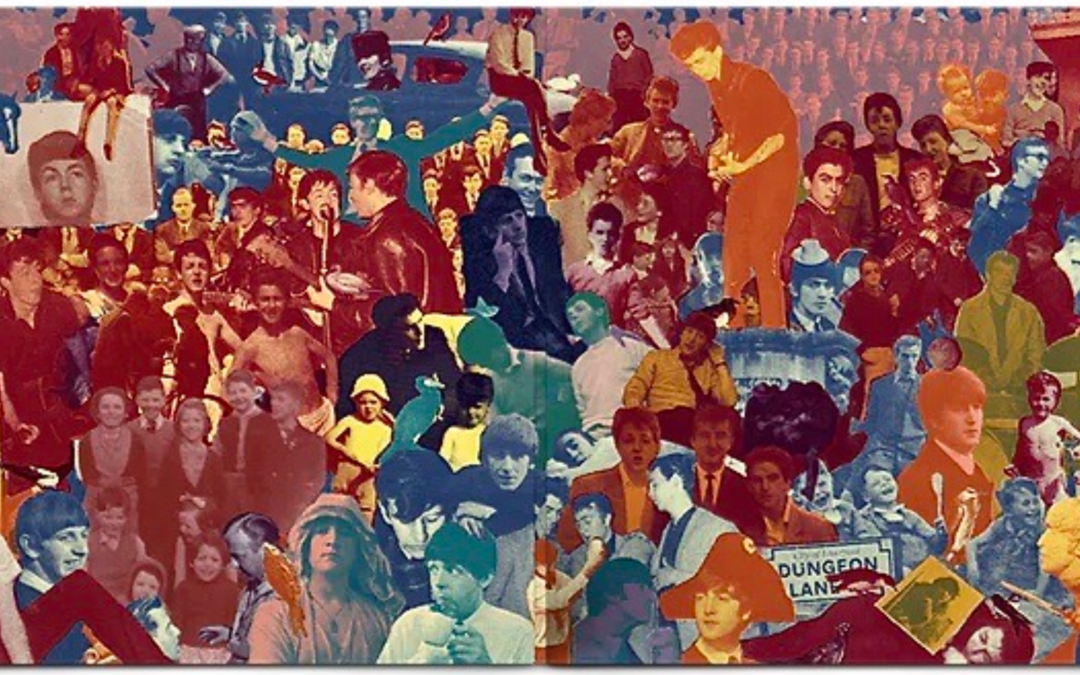
Sir Paul McCartney released his new album ‘The Boys of Dungeon Lane’ a couple of weeks ago. Check it out on whatever streaming service you might use.
It’s hard to count how many albums Macca has released over the decades. With the Beatles, Wings, solo projects, compilations, live recordings, video albums and more, it’s easy to say a lot. Probably in the range of 50 or so.
He’s written and co-written more than 1000 songs, making him one of the most prolific artists in modern history.
Sixty years goes by, Paul celebrates his 84th birthday with live shows, guest appearances and another album.
He’s also been top billing for the promotional circuit:
- Record Store Day updates concerning variants and new buyers
- A conversation with Paul Mescal, the bloke who’ll portray Paul in the upcoming Beatles movies
- The Rest Is History, with Tom Holland
- Closing out the Colbert Show, with an A-list of other performers
- Numerous variants on the new release (I humbly acknowledge that I’ve only bought two versions)
- Public listenings at places like the ‘Maccaranda’ (Jacaranda) in Liverpool
The Reviews
Full disclosure: I love Paul. I’m writing a fictional novel and my goal is to include him at the end of the story with a message to everyone.
Yes, I think he’s that great that he gets to sum up four years of writing work on my part.
However, some people put a lot of pressure on themselves to write extremely detailed reviews of his recent work.
- Pitchfork (with an acceptable, but still not overwhelming 7.2 out of 10)
- Classical-Music.com (only because this came up in my news feed). A good read because they strip down every track on the album
- Reddit conversation / thread about the album
- Brutally Honest Reviews – someone who doesn’t adore Paul as much as I do
My Song-By-Song Review
I’ve had a chance to listen to Boys From Dungeon Lane a couple of times. I feel it’s important to commit this kind of time to a work like this before trying to generate real feedback because some songs might be really catchy and can … linger … in your brain, potentially distracting you from the whole story being told on the album or, at a minimum, keeping you from thinking about the other tunes.
If you’re still reading this, please bear in mind that I really don’t have authority to criticize this kind of endeavour, nor am I the MOST devout Paul McCartney fan that’s out there. I may also try to read something into the lyrics or styles that really weren’t part of Paul’s plan. I’ll wait until he gets back with comments to tell you if I hit it or not.
On a whole, this is an excellent collection of songs. Every single one is a key component of a whole volume. There are no chapters that you can skip in this book.
As a Beatles geek and wanna-be musician, there were moments where the orchestration could have been a little more deep, rounded or even playful, but those moments are few and far between.
Crafting a masterpiece at age 84 after more than 60 years in the business is, in itself, a massive accomplishment.
As You Lie There
Paul McCartney has been making the rounds with short video clips where he talks about this ‘mystery chord’ that begins his album.
To be honest, despite studying music, I don’t know specifically what the chords used in the three-chord sequence, but I’m familiar with the trick that’s a classic moment in MANY Beatles songs: the chromatic decline to a root note. In many ways, you can think of it as ‘circling’ the home, or the root note, that kicks off the song.
The use of chromatic declines help the writer begin on a discordant note – creating tension – and then playing something that’s much more harmonious and relaxing.
Thematically, even though Paul pretends it wasn’t really intentionally, I’d like to point out that his intent might be to pull us in from the chaos of the world into the soothing and relaxing tones of his masterful songwriting.
Without having the opportunity to interview Paul, it’s hard to know the meaning of some of the lyrics. Is ‘As You Lie There’ about John Lennon, a girlfriend or maybe must someone he was stalking? Maybe not the latter, but I think you know what I mean. We’ve all had someone special in our lives at different junctions.
Lost Horizon
You’ve gotta live for now
Make every moment count
You’ve gotta live for now
Along the lost horizon
The immediate thought on hearing this song was that it was influenced by Jeff Lynne, of ELO. Of course, I have to remind myself that it’s actually the opposite, where we see the DNA of the influence that Paul has on so many artists (note: this will be a repeated comment through the rest of these songs).
In my fiction work, I see my character sitting with Paul and he says something similar to the lyrics above, reminding us of the carpe diem nature of life.
This also extends to our relationship with the planet: if we’re able to dial back somewhat with our day-to-day demands, we might actually be able to enjoy the planet a while longer.
Days We Left Behind
This is a sentimental piece about his early days with the Beatles (‘smoky bars and cheap guitars’).
Note: Paul’s singing about the skylark rising. It’s rare that he has a collection of songs without referring to at least one animal, usually birds. The connection here is the notion of escape. He and his buddies were able to escape the hardship of Liverpool, while others would feel the pain of a life of toil and grind on the docks.
Ripples in a Pond
Ripples is probably my favourite on this album. McCartney dedicates the song to his wife Nancy.
The immediate vibe of the song is straight out of the 1980s. It feels a little like a Prefab Sprout tune (check around 1:20), but in classic McCartney form, there’s a bridge around the midway point that differentiates it from one-hit moments.
This song lands around the middle of the first side (if you’re into vinyl), making it a light bouncy balancing act to some of the heavier moments that surround it.
It’s great to see Paul McCartney being humbled and delighted with his circumstances, not taking anything for granted.
Mountain Top
On first listen I was getting whiffs of late-stage Mike Scott Waterboys, but not quite. Apparently, it’s a tune about a girl at a music festival.
What I love on this tune is the chaotic musical rant that starts around the 3:00 mark, like a brief homage to ‘Live and Let Die’.
Down South
There are no hidden references in this song. It’s all about John.
The morning bus was where we two would meet
I sat beside you on an empty seat
We’d talk about guitars and rock and roll
They were the subjects that would nеver grow oldIt was a good way to get to know you
A fine way to work it all out
It was a good way to gеt to know you
Before we learned to twist and shout
Of note for real Beatles geeks is that the chord progression is very similar to ‘Two of Us‘ from the album ‘Let it Be’. Probably not a coincidence.
We Two
There are moments on this album where it feels like (gasp!) Paul McCartney and his team could have done just a tiny bit more to complete a few of the songs.
I love the song ‘We Two’, but when it comes time for the chorus, it feels a little flat and as an experiment, I added some cello sound to round out the lower frequencies (listen around 0:50 and 1:58).
I know – BLASPHEMY!
But I had fun doing it.
Come Inside
‘Come inside my mind’. Ummm … what?
I feel like this is a bit of a statement concerning the view we should have on all of the privacy-invading, Epstein-flying techbros that insist on using public funds for tracking and monitoring everything we do in our lives.
I don’t have anything to hide. Certainly a celebrity like McCartney doesn’t get many opportunities to dial back and insist on privacy, so he’s an ‘open book’ as he says in the lyrics.
How have we come to this point where we have to remind the weirdos in charge that we’re not the villains?
No need to over analyze, though. According to Paul, it’s ‘basically a rocker’. Agreed!
The song feels a little like a mix of a U2 song (American Soul comes to mind).
He has a comment about the last chord being a major amid a bunch of minors. This is known as a ‘Picardy Third’.
Where have we heard that before?
From a little band called the Beatles with songs like ‘And I love her’, where the song ends on D major and not D minor (after mysteriously changing key halfway through), ‘Things We Said Today’ and ‘I’ll Be Back’.
Never Know
This song had me stumped until the 3:30 mark, when it becomes a full-on Beatles song, with the recorder and then the follow orchestration.
Note again the descending chromatics, this time more as a choir.
There’s definitely some tape work at play with this song, where there are moments of whirling and garbling sounds added.
When interviewed, Paul said that this song represents his thoughts about times in Laurel Canyon in California.
Home to Us
This song is written with Ringo Starr, some guy who played drums for the Beatles.
If you’re looking for a song that might be a theme song for a TV show that’s all about nostalgia and living in the 60s or 70s or 80s or whenever, this would be it.
If you’re looking for a song that proves that Paul McCartney is a key influence on bands like Blur, Oasis and about, oh, a million others, this would be it.
If you’re looking for a great song that makes you tap your feet, this would be it.
By the way, wouldn’t it be great to pull in people like Chrissie Hynde of the Pretenders to do backup vocals with you?
Life Can Be Hard
The White Album, specifically ‘Your Mother Should Know’. Instruments like oboes and clarinets toy around in the background.
Paul routinely talks about his experience playing piano in the parlour with his family, pounding out cute show tunes from the 20s and 30s. The chord progression certainly matches these types of songs, but Paul adds his own unique style to the song around the 1:00 point, where he updates the vibe of the song to launch it forward in time.
I certainly appreciate even Paul McCartney acknowledging that Life Can Be Hard and this song is a reflection on his experience during Covid lockdowns.
I’ve listened to this tune a few times and it definitely has that classic ‘old timey’ vibe to it.
Once again, I know it’s not my place to make recommendations for how to ‘improve’ Sir Paul’s work, but I feel like a solo moment with someone whistling a verse would add to the old timey vibe, but also the analog feel of the song.
First Star of the Night
“Raining in Costa Rica”.
Sometimes, just seeing a single star in the evening after a deluge gives you a warm feeling, something to look forward to.
Salesman Saint
Everyone should write songs or stories about the people that built their world.
Note the blasts of 30s like orchestra in the background.
Momma Gets By
The closer on this album is the most dramatic and emotional one for me.
While some people were quick to jump on Paul McCartney for skewering deadbeat dads in this song (“Momma gets by while Papa gets high”), maybe this is just Paul’s way of trying to understand his own behaviour over the years and the impact it might have had on some of his partners. Given the previous song, I’m not sure why people would think it’s about hardship with his own parents, but until I land my opportunity to interview Sir Paul directly, I can’t say for sure.